
What Client Experience Leadership Means
Client experience leadership is the deliberate design, governance, and improvement of every meaningful interaction a client has with an advisory firm.
Practice management focuses on the firm’s operating model. It encompasses staffing, workflow, compliance routines, technology, capacity, and margin control. Client experience leadership focuses on how clients perceive, navigate, and trust that model. It governs clarity before meetings, confidence during decisions, continuity after service requests, and trust during uncertainty.
Efficiency, capacity, and consistency remain important. They simply become inputs to a broader leadership discipline.
Practice Management vs. Client Experience Leadership
Advisory leaders usually diagnose maturity through owners, metrics, tools, meeting cadence, and decision lenses. Comparing these two disciplines reveals distinct operational priorities.
| Dimension | Practice Management | Client Experience Leadership |
|---|---|---|
| Purpose | Improve the firm's operating model, capacity, and profitability. | Improve the client's lived navigation and emotional confidence. |
| Topics | Workflow design, staffing, technology adoption, compliance routines, segmentation, and operational scale. | Journey design, communication standards, onboarding quality, feedback loops, service recovery, and referral readiness. |
| Metrics | Task completion, margin control, and capacity utilization. | Client comprehension, perceived continuity, and trust during uncertainty. |
Main Point: The shift is not from operations to softness; it is from internal control to externally felt value.
Why Practice Management Alone Can Plateau
A firm can become more efficient without becoming easier, clearer, or more reassuring to clients. The risk is not that practice management fails. The risk is that it succeeds on internal measures while clients still feel friction.
Consider a scheduling tool that reduces staff back-and-forth. A firm reduces scheduling time by using an automated calendar link, but recently widowed or newly referred clients interpret the same link as impersonal when no advisor or service associate explains what the first meeting will cover. The task is efficient, yet the experience degrades.
Similarly, an annual review workflow is marked complete in the CRM. The retiring couple leaves unsure whether the withdrawal sequencing, tax timing, or cash-flow decision is actually their responsibility before the next meeting. In another scenario, a service ticket closes after a beneficiary form is sent, but the client still does not know whether the custodian, estate attorney, spouse, or advisor must act next.
Caution: Operational metrics can mask client friction when they measure task completion rather than client comprehension or confidence.
The CFP Board Code of Ethics and Standards of Conduct (2019) frames fiduciary duties around the client's interests. This supports the argument that internal efficiency cannot be the sole leadership lens.
Five Capabilities That Define Experience-Led Advisory Firms
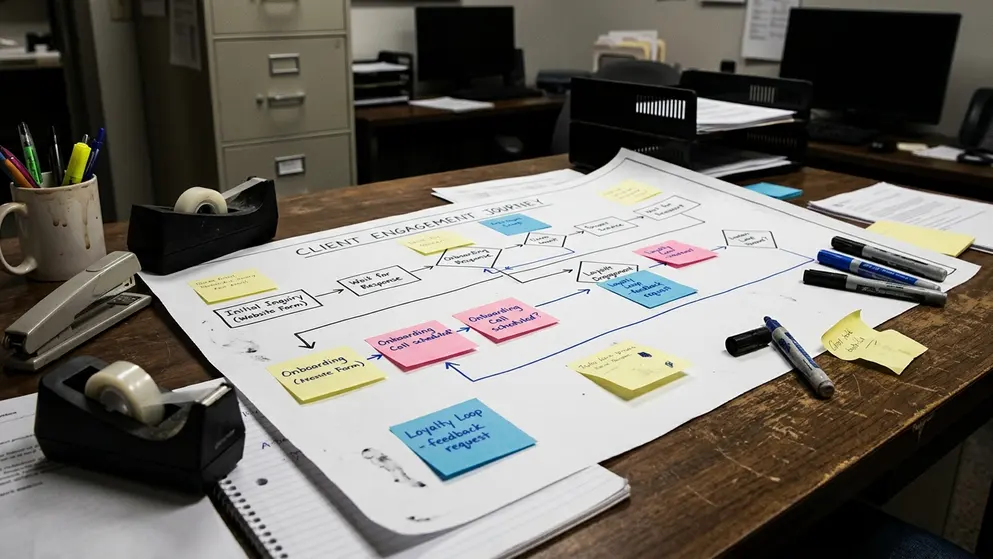
Firms cannot improve moments of truth until someone owns the journey, translates the promise, and knows how breakdowns are escalated.
- Journey ownership: Assign clear responsibility for onboarding, review meetings, life-event support, service requests, and transitions such as advisor retirement or client household change.
- Client promise translation: Convert brand language into observable behaviors, scripts, turnaround expectations, and meeting standards. This includes pre-meeting agenda delivery and plain-language next-step summaries.
- Moment-of-truth design: Identify situations where trust is won or lost. Examples include market volatility calls, beneficiary updates, estate document reminders, post-referral introductions, inherited account onboarding, and the first meeting after a spouse dies.
- Service recovery sequence: Acknowledge the missed expectation, identify the owner, escalate if needed, correct the issue, and follow up with the client after the fix is complete.
- Continuous learning sources: Gather qualitative client comments, advisor observations, staff debriefs, complaint themes, and recurring service log patterns.
This approach is most useful after the firm has baseline operational hygiene in place, such as a functioning CRM, assigned service roles, and a documented meeting process.
Build Feedback Loops Without Metric Theater
Client feedback should guide decisions rather than decorate reports. Moving away from decorative dashboards requires a closed-loop routine where comments become assigned actions.
Practical methods include post-onboarding check-ins, annual review debrief questions, client advisory councils, service issue logs, referral-source interviews, and staff listening sessions. Schedule post-onboarding check-ins between day 21 and day 35 after account opening or planning engagement launch. At this stage, clients have experienced paperwork, portal setup, first follow-up, and at least one service touch.
During annual reviews, ask specific debrief questions. "What was still unclear after today's meeting?" and "Was there anything you expected us to raise that we did not?" yield better insights than generic satisfaction scores. Track these responses in service issue logs using tags for timing, clarity, ownership, empathy, documentation, handoff, technology, custodian dependency, and unresolved follow-up.
The feedback-to-action sequence requires discipline. Tag the issue, identify the owner, set the improvement, communicate the change, and review whether the friction declined qualitatively. Do not present internal survey numbers as proof unless the methodology is credible and disclosed. A methodology relying on post-onboarding check-ins provides reliable friction data, provided the sample size reflects the firm's actual client demographics rather than just highly engaged advocates. Avoid overinterpreting small or biased samples.
A Practical Roadmap for Moving From Management to Leadership
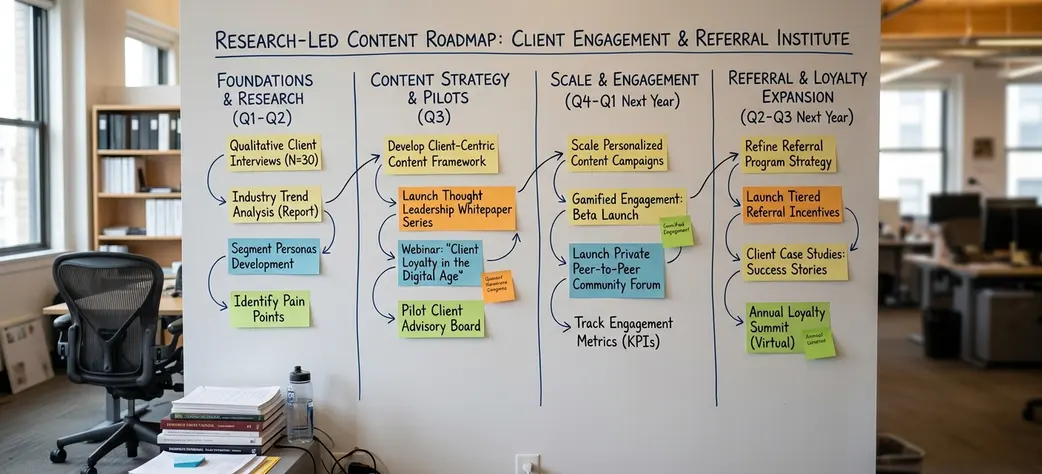
Advisory teams can usually commit to a quarter of focused operating work. A phased 90-day implementation plan builds momentum without overwhelming the staff.
First 30 Days
Define the client promise and select one client segment. Inventory the current journey and identify the top three friction points. Journey inventory artifacts include the onboarding email sequence, meeting agenda template, discovery data capture, document checklist, risk tolerance discussion, planning software handoff, custodian paperwork status, and first review meeting preparation.
Next 30 Days
Redesign one journey. Create standards for communication and follow-up, assign ownership, and test the process with a small client group.
Final 30 Days
Review feedback, update the CRM workflow, train the team, and decide which experience standard becomes firmwide. Track progress using non-invented indicators: response time adherence, unresolved service items, client meeting preparation completion, documented follow-up, qualitative client comments, and repeat friction themes in staff debriefs.
Who Owns the Client Experience?
Ownership should be shared but not vague. Senior leadership sets standards, approves the client promise, removes cross-functional bottlenecks, and decides which experience gaps deserve firmwide attention.
Advisors deliver professional judgment. They explain trade-offs, notice client anxiety, and decide when a standard process needs a more personal response. Meanwhile, client service teams manage continuity. They track open items, confirm documentation, coordinate handoffs, and protect follow-through after meetings.
Operations supports repeatability by maintaining workflows, CRM fields, templates, technology settings, service queues, and process documentation. This shared structure requires a simple governance rhythm: a monthly friction review, a quarterly journey improvement decision, and an annual client promise refresh.
Compliance and fiduciary obligations shape boundaries. However, experience leadership is broader than compliance because it also addresses clarity, confidence, and continuity.
The Leadership Choice Ahead
Firms face a distinct choice. They can keep optimizing internal machinery or start governing the client's lived experience with the same seriousness. Internal machinery includes workflows, staffing, technology, compliance routines, and scale. Lived experience includes how clients understand, trust, and move through those systems.
Referrals, onboarding, planning delivery, annual reviews, service requests, life events, and transitions all sit inside the broader customer journey rather than inside isolated operational tasks. Lemon and Verhoef's 2016 Journal of Marketing article describes customer experience across three journey stages—prepurchase, purchase, and postpurchase.












Responses
Leave a comment.